

How to Throw a Boomerang
Date Posted:5 June 2023
Want to know how to throw a returning boomerang and actually give it a chance of coming back? The secret isn't simply throwing harder — it's the combination of grip, spin, angle and wind.
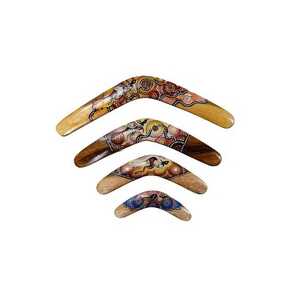
Hold a returning boomerang almost vertically, aim across a light breeze, throw slightly above the horizon and snap your wrist at release to create plenty of spin. Don't throw it flat like a Frisbee.
Safety First
Only throw a boomerang that is designed for throwing. Use a large, clear outdoor area away from people, animals, roads, buildings, vehicles, windows, power lines and other obstacles. Children should always be supervised by an adult.
Getting the setup right makes learning much easier. Before your first throw, check these three things.
Find Open Space
A large grassed field or other clear open area gives the boomerang room to complete its flight without hitting obstacles.
Check the Wind
A light, steady breeze is much easier for beginners than strong or gusty wind. Work out which direction the breeze is coming from.
Check Your Boomerang
Not every boomerang is designed to return. Follow the instructions supplied with your particular boomerang before throwing it.
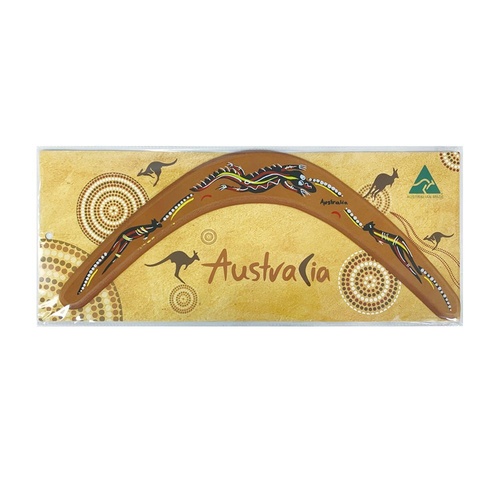
Australian Made Boomerang with Instructions
If you're buying a boomerang specifically to learn how to throw, start with one that's actually intended for recreational throwing and includes instructions.
- Australian made
- Throwing instructions included
- Available in multiple sizes
- Australian Aboriginal-inspired artwork
These are the basic principles for a conventional returning boomerang. Always follow any specific instructions supplied with your particular model.
Hold It Near the End
Grip one end of the boomerang firmly enough to control it while still allowing it to leave your hand cleanly. A pinch-style grip between your thumb and fingers is commonly used.
Aim for a clean release with plenty of spin.Work Out the Wind Direction
Face into a light breeze first. Your throwing direction will normally be offset from the wind rather than directly into it. Follow the instructions supplied with your boomerang for the recommended starting angle.
Keep the Boomerang Nearly Vertical
Hold the boomerang upright with only a slight tilt. It should not be laid flat like a Frisbee.
This is one of the most important beginner techniques.Aim Slightly Above the Horizon
Pick a distant reference point and aim slightly upward rather than throwing directly toward the ground or high into the sky.
Throw Forward and Snap Your Wrist
Make a smooth overarm throw and finish with a sharp wrist snap. The wrist action gives the boomerang the rapid rotation it needs during flight.
Spin matters more than simply throwing as hard as possible.Watch the Flight and Adjust
Let the boomerang complete its flight and see where it lands. Small changes to your release angle, wind direction or spin can make a big difference on the next attempt.

Instructions Right on the Packaging
Our Australian made throwing boomerang includes instructions on the back of the packaging covering the basic grip, stance and throwing technique — handy to take with you when practising outdoors.
Instructions can vary between boomerang models, so always check the directions supplied with the one you purchase.
Don't Throw It Like a Frisbee
A conventional returning boomerang should normally leave your hand close to vertical. Throwing it flat or sidearm can dramatically change its flight and prevent the controlled circular return you're trying to achieve.
Wind direction plays an important role. Start by identifying where a light breeze is coming from, then use the instructions supplied with your boomerang to establish the best throwing direction.
Right-Handed Boomerang
The throwing direction is usually offset to one side of the incoming wind rather than aimed directly into it.
Left-Handed Boomerang
Left-handed returning designs generally use a mirrored setup compared with their right-handed equivalent.
The exact angle can vary depending on the boomerang design and weather conditions, so treat general advice as a starting point and follow the instructions for your model.
A returning boomerang's flight comes from a combination of forward movement, rapid rotation and aerodynamic shape .
As it spins through the air, the rotating arms move through the air at different speeds. This creates different aerodynamic forces across the boomerang and gradually turns its flight path.
During a successful flight, a returning boomerang can begin nearly vertical, curve through the air and gradually change orientation as it completes its path.
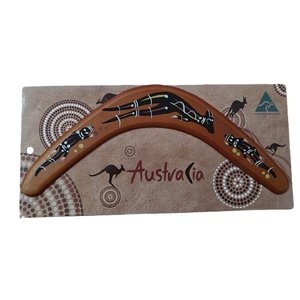
Designed to Be More Than a Display Piece
Boomerangs are one of Australia's most recognisable souvenirs, but if you actually want to practise throwing one, make sure you choose a model intended for that purpose.
Decorative boomerangs, miniature souvenirs and boomerangs mounted on display stands shouldn't automatically be assumed to be returning throwing models.
No — and that's an important distinction.
Boomerangs have been made in many different forms, and returning boomerangs are only one type.
Aboriginal peoples across Australia developed different implements for different practical and cultural purposes, and their design and use varied between communities and regions.
For modern recreational throwing, make sure the boomerang you've purchased is specifically intended to be thrown and follow the instructions that come with it.
Throwing It Flat
A returning boomerang should generally be released close to vertical, not horizontally like a Frisbee.
Ignoring the Wind
Even a good throw can miss its intended return path if you haven't considered the direction of the breeze.
Using Only Arm Power
Throwing harder isn't always better. A clean release and strong wrist-generated spin are extremely important.
Practising in Strong Wind
Gusty or strong wind makes the flight much harder to predict, particularly when you're still learning.
Throwing in a Small Area
Returning boomerangs need plenty of clear space. Don't practise near spectators, roads, buildings or other obstacles.
Expecting Perfection Immediately
Small changes make a big difference. Use each flight to adjust your aim, angle and wrist action.
- Start in light wind. Calm, predictable conditions make learning much easier.
- Focus on spin. Use your wrist rather than simply trying to throw harder.
- Keep it near vertical. Avoid the natural temptation to throw sidearm.
- Use the same starting point. This makes it easier to judge what changed from one throw to the next.
- Adjust one thing at a time. Change your direction, release angle or power gradually.
- Follow your boomerang's instructions. Different designs can require slightly different techniques.
Do You Throw a Boomerang Like a Frisbee?
No. A conventional returning boomerang is normally thrown close to vertical with an overarm action rather than laid flat and thrown sidearm.
Does Every Boomerang Come Back?
No. There are both returning and non-returning boomerang designs. Make sure your boomerang is intended for returning flight before practising this technique.
How Hard Should I Throw a Boomerang?
You need enough forward speed for the flight, but simply throwing as hard as possible isn't the goal. Good rotation from a sharp wrist action is extremely important.
Why Isn't My Boomerang Coming Back?
Common reasons include throwing it too flat, using the wrong direction relative to the wind, insufficient spin or using a boomerang that isn't designed to return.
Can Left-Handed People Throw a Boomerang?
Yes. Some returning boomerangs are designed specifically for a particular throwing direction, so check the instructions supplied with your model.
What's the Best Weather for Learning?
A light, steady breeze is generally much easier for a beginner than strong, gusty or rapidly changing wind.
Ready to Give It a Throw?
Start with the right boomerang, find a safe open space and practise your grip, release and wrist snap. Once you see that first returning flight, you'll understand why learning to throw a boomerang is so satisfying.
Shop Boomerangs with Instructions →