Union Jack, Commonwealth Star & Southern Cross Explained
What does the Australian flag mean? Learn what the Union Jack, Commonwealth Star and Southern Cross represent, plus the history behind Australia's national flag.
★ Australian Symbols
What does the Australian flag actually mean?
The Australian National Flag is one of the country's most recognisable symbols, but every part of its design has a story behind it.
From the Union Jack and seven-point Commonwealth Star to the five stars of the Southern Cross, here's what the symbols on the Australian flag represent and how the design developed.
Quick Answer The Australian flag has three main elements.
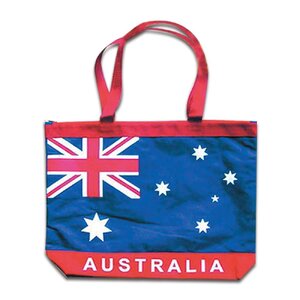
The Union Jack acknowledges Australia's history of British settlement, the Commonwealth Star represents Australia's federal system, and the five stars on the right represent the Southern Cross.
The Meaning Behind Australia's National Flag
The Australian National Flag consists of three official elements: the Union Jack, the Commonwealth Star and the Southern Cross. Together they reflect Australia's history, federation and geographic position beneath the southern skies.
The Union Jack
The Union Jack appears in the upper-left corner of the Australian flag. According to the Australian Government, it acknowledges the history of British settlement in Australia.
The Commonwealth Star
The large white seven-pointed star below the Union Jack is known as the Commonwealth Star or Federation Star. Six points represent Australia's six states, while the seventh represents Australia's territories.
The Southern Cross
Five white stars on the right-hand side of the flag represent the Southern Cross, or Crux Australis, a constellation strongly associated with the southern skies and long used for navigation.
Why Does the Commonwealth Star Have Seven Points?
The Commonwealth Star did not always have seven points. The original flag design used a six-pointed star to represent the six Australian states.
A seventh point was added in 1908 to represent Australia's territories. The Commonwealth Star is therefore a symbol of Australia's federal system rather than simply another decorative star.
What Do the Five Stars of the Southern Cross Represent?
The five stars on the fly of the Australian flag represent the Southern Cross constellation.
Four of the stars have seven points, while the smaller Epsilon Crucis has five points. The individual stars are known as Alpha, Beta, Gamma, Delta and Epsilon Crucis.
The Southern Cross became an important Australian symbol well before the current national flag and appeared on several early Australian flags.
Cultural Context
The Southern Cross and First Nations Astronomy
The official symbolism of the Australian National Flag and the much older cultural significance of the stars are separate subjects.
First Nations peoples observed and interpreted the Southern Cross long before the modern Australian flag existed. Different Aboriginal traditions have their own stories and understandings of the stars.
For example, Australian Government educational material notes that some First Nations peoples viewed the Southern Cross as the footprint of a giant wedge-tailed eagle, with the nearby pointer stars associated with a throwing stick used to hunt it.
A Short History of the Australian Flag
After the six Australian colonies federated to form the Commonwealth of Australia in 1901, a competition was held to design a flag for the new nation.
More than 32,000 entries were submitted. Five nearly identical designs were eventually selected as joint winners, and the resulting design became the basis of the Australian National Flag we recognise today.
1901 A national flag design competition attracted 32,823 entries.
3 September The winning Australian flag design was first flown in Melbourne in 1901.
1908 The Commonwealth Star changed from six points to seven.
Flag Day 3 September is now recognised as Australian National Flag Day.
Quick Australian Flag Facts
How many stars are on the Australian flag? There are six stars in total: the Commonwealth Star and the five stars of the Southern Cross.
How many points does the Commonwealth Star have? Seven — six for the states and one representing Australia's territories.
Why is the Union Jack on the Australian flag? It acknowledges Australia's history of British settlement.
When was the Australian flag first flown? The winning design was first flown on 3 September 1901.
Australian Flag Meaning – Frequently Asked Questions
What are the three main symbols on the Australian flag?
The three main elements are the Union Jack, the Commonwealth Star and the Southern Cross.
What does the seven-point star mean?
The Commonwealth Star represents Australia's federal system. Six points represent the six states and the seventh represents the territories.
Why does Australia have the Southern Cross on its flag?
The Southern Cross is one of the best-known constellations of the southern skies and has been used as an Australian symbol since before federation.
Why is the British flag on the Australian flag?
The Union Jack appears on the Australian National Flag to acknowledge Australia's history of British settlement.
How many stars are on the Australian flag?
There are six stars altogether: one Commonwealth Star and five stars forming the Southern Cross.
When is Australian National Flag Day?
Australian National Flag Day is observed on 3 September, marking the date the winning flag design was first flown in 1901.
Show Your Aussie Pride
Explore Australian flags, bunting, flag accessories and Aussie gifts for Australia Day, citizenship celebrations, sporting events or simply to keep a little piece of Australia close by.
Welcome to our website. If you continue to browse and use this website, you are agreeing to comply with and be bound by the following terms and conditions of use, which together with our privacy policy govern Souvenirs Australia Warehouse’s relationship with you in relation to this website. If you disagree with any part of these terms and conditions, please do not use our website.
The term ‘Souvenirs Australia Warehouse’ or ‘us’ or ‘we’ refers to the owner of the website whose registered office is 32/2 Railway Pde, Lidcombe NSW 2141. Our ABN is 13646656957. The term ‘you’ refers to the user or viewer of our website.
The use of this website is subject to the following terms of use:
The content of the pages of this website is for your general information and use only. It is subject to change without notice.
Neither we nor any third parties provide any warranty or guarantee as to the accuracy, timeliness, performance, completeness or suitability of the information and materials found or offered on this website for any particular purpose. You acknowledge that such information and materials may contain inaccuracies or errors and we expressly exclude liability for any such inaccuracies or errors to the fullest extent permitted by law.
Your use of any information or materials on this website is entirely at your own risk, for which we shall not be liable. It shall be your own responsibility to ensure that any products, services or information available through this website meet your specific requirements.
This website contains material which is owned by or licensed to us. This material includes, but is not limited to, the design, layout, look, appearance and graphics. Reproduction is prohibited other than in accordance with the copyright notice, which forms part of these terms and conditions.
All trademarks reproduced in this website, which are not the property of, or licensed to the operator, are acknowledged on the website.
Unauthorised use of this website may give rise to a claim for damages and/or be a criminal offence.
From time to time, this website may also include links to other websites. These links are provided for your convenience to provide further information. They do not signify that we endorse the website(s). We have no responsibility for the content of the linked website(s).
Your use of this website and any dispute arising out of such use of the website is subject to the laws of Australia.
By submitting an order on this website you agree to be added to our customer contact mailing list in order to receive occasional email communication from us such as newsletters and special offers from time to time. You will be able to unsubscribe from these newsletters at any time.
You understand and agree that all prices are charged in Australian Dollars, and that any other displayed currencies are for convenience and are approximate only.
Privacy Policy
★ Privacy & Security
How we protect and use your personal information
This Privacy Policy explains how Souvenirs Australia collects, holds, uses and discloses personal information when you browse our website, place an order, create an account, subscribe to our communications or otherwise interact with us.
Souvenirs Australia WarehouseOperated by Australian Souvenirs Pty Ltd
ABN: 13 646 656 957Sydney, New South Wales, AustraliaAustralian owned and operated
We Protect Your InformationReasonable safeguards are used to protect personal information.
Secure Payment ProcessingPayment information is processed using specialist payment providers.
Marketing ControlsYou can unsubscribe from marketing communications at any time.
Access & CorrectionYou can ask us to access or correct personal information we hold about you.
About This Privacy Policy
Souvenirs Australia is committed to handling personal information responsibly and transparently. We aim to manage personal information in accordance with applicable Australian privacy laws, including the Privacy Act 1988 and the Australian Privacy Principles where they apply to us.
This policy applies to personal information collected through our website, online store, customer service channels, newsletter subscriptions, promotions, reviews and other interactions with Souvenirs Australia.
You can generally browse our website without identifying yourself. However, certain services such as placing an order, creating an account, subscribing to communications or contacting us require personal information so that we can provide the requested service.
What Personal Information We Collect
The information we collect depends on how you interact with us. It may include:
Identity & Contact Information
Name, email address, telephone number, billing address, delivery address, postcode and other contact information you provide.
Order & Transaction Information
Products ordered, order history, transaction status, delivery information, returns, refunds and communications relating to your purchases.
Account & Marketing Information
Account information, newsletter preferences, communication preferences, promotional participation, survey responses and records relating to marketing preferences.
Technical & Website Information
IP address, browser type, device information, pages viewed, referral information, cookies, session information and approximate location derived from your internet connection.
Payment information
Payments may be processed by specialist payment providers. Card details are generally transmitted securely to the applicable payment provider rather than stored directly by Souvenirs Australia. We may retain transaction references, payment method information, payment status and other limited information required for accounting, refunds, fraud prevention and customer support.
Sensitive information
We do not ordinarily seek to collect sensitive personal information. Please avoid sending sensitive information to us unless it is reasonably necessary for us to assist with your enquiry or transaction.
How We Collect & Use Personal Information
We generally collect personal information directly from you when you:
place an order or create an account
subscribe to our newsletter or other communications
contact us by email, telephone or through our website
submit a review, survey, enquiry or other content
participate in a promotion or offer
browse or interact with our website.
Information may also be collected automatically through cookies, website logs and similar technologies, or received from service providers involved in processing your transaction or delivering your order.
We may use personal information to:
process, fulfil and manage orders
process payments and refunds
arrange shipping and delivery
respond to enquiries and provide customer support
manage returns, damaged items and delivery issues
create and administer customer accounts
detect and prevent fraud, misuse and security incidents
display relevant currencies or website content based on approximate location
understand how customers use our website and improve our products and services
maintain accounting, taxation and business records
manage disputes and enforce our legal rights
comply with applicable legal and regulatory obligations
send marketing communications where permitted by law.
We may also use aggregated or de-identified information for analytics, reporting, website improvement and business planning where that information no longer reasonably identifies an individual.
When We Share Personal Information
We may disclose personal information where reasonably necessary to operate our business, provide services to you or comply with legal obligations.
This may include disclosure to:
ecommerce, website hosting and cloud service providers
payment processors, banks and payment platforms
Australia Post, couriers, freight providers and other delivery services
email, newsletter and customer communication providers
analytics, technology, IT support, cybersecurity and fraud-prevention providers
professional advisers such as accountants, insurers, consultants and legal advisers
government agencies, courts, regulators or law-enforcement authorities where required or authorised by law
another organisation in connection with a proposed or actual sale, restructuring, merger or transfer of all or part of our business, subject to appropriate confidentiality and legal requirements.
We do not sell or rent your personal information to unrelated third parties for their own independent marketing purposes. Service providers may receive information where reasonably necessary to provide services to Souvenirs Australia or our customers.
Cookies, Analytics & Location Information
Our website may use cookies and similar technologies to operate correctly, remember preferences, maintain shopping sessions, analyse website usage, improve performance and provide relevant website functionality.
We may also use your IP address or similar technical information to estimate your general location. This may be used to provide localisation features such as displaying an appropriate currency or other location-relevant website content.
Cookies and similar technologies may be used for:
shopping cart and checkout functionality
account and session management
security and fraud prevention
remembering website preferences
currency and location-related functionality
traffic, analytics and performance measurement
marketing and advertising where permitted.
Most browsers allow you to block or delete cookies. Disabling certain cookies may affect the functionality of the website, including shopping cart, account, currency or checkout features.
Marketing Communications
We may use your contact information to send newsletters, special offers, product updates and other promotional communications where permitted by applicable law, including where you have provided consent or where consent may lawfully be inferred from the circumstances and our relationship with you.
Marketing communications will identify Souvenirs Australia and provide an appropriate method for opting out.
You can stop receiving marketing emails at any time by:
using the unsubscribe link provided in a marketing email, or
Unsubscribing from marketing does not prevent us from contacting you about an existing or previous order, payment, delivery, return, account, customer service enquiry or other non-marketing matter.
Overseas Service Providers & Data Processing
Some of the technology, payment, cloud, analytics, communication and other service providers we use may store, process or access information outside Australia.
The locations used by service providers may change over time and, because some providers use global infrastructure, it may not always be practicable for us to identify every country in which information may be processed.
Where Australian privacy law requires us to take particular steps in relation to an overseas disclosure of personal information, we will take reasonable steps to meet those requirements.
Security & Data Breaches
We take reasonable steps to protect personal information from misuse, interference, loss and unauthorised access, modification or disclosure. Depending on the circumstances, these measures may include access controls, secure systems, encryption, passwords, security software, service-provider controls and administrative procedures.
Payment processing is generally performed through specialist payment providers rather than by storing complete payment card details directly within our own website systems.
No method of transmitting or storing information electronically can be guaranteed to be completely secure. While we take reasonable precautions, we cannot guarantee absolute security against every possible cyberattack, system failure or unauthorised action. This statement does not limit any obligation we have under applicable law.
If a data breach occurs, we will assess the circumstances and take appropriate steps to contain and respond to it. Where the Notifiable Data Breaches scheme or another applicable law requires notification, we will notify affected individuals and the relevant regulator as required.
How Long We Keep Personal Information
We retain personal information for as long as reasonably necessary for the purposes for which it was collected or for another permitted purpose.
This may include retaining information for:
order fulfilment and customer service
accounting, taxation and financial record keeping
warranty, return and refund matters
fraud prevention and security
legal claims and dispute resolution
compliance with applicable laws and regulatory requirements.
Where required by applicable privacy law, personal information that is no longer reasonably required will be destroyed or de-identified, unless we are legally required or otherwise permitted to retain it.
Accessing or Correcting Your Information
You may contact us to request access to personal information we hold about you or to ask us to correct information that is inaccurate, incomplete or out of date.
To protect customer privacy, we may ask you to provide reasonable information so that we can verify your identity before providing access to or changing personal information.
There may be limited circumstances in which access or correction can be refused or restricted under applicable law. Where required, we will explain the reason for doing so.
If you have a question, concern or complaint about how we have handled your personal information, please contact us first so that we can investigate the matter.
Please provide enough information for us to understand the issue, together with your preferred contact details and any relevant order or reference number.
We will consider privacy complaints in good faith and aim to respond within a reasonable period.
Links to Other Websites
Our website may contain links to websites operated by third parties. Once you leave our website, the privacy practices and security of those websites are outside our control.
A link does not necessarily mean that we endorse the privacy, security or content practices of the third-party website. We recommend reviewing the applicable privacy policy before providing personal information to another website.
Changes to This Privacy Policy
We may update this Privacy Policy from time to time to reflect changes to our business, website, technology, service providers or legal obligations.
The current version will be published on this page and will apply from the date it is published. We encourage you to review this policy periodically.
Contact Our Privacy Team
Contact us if you have a privacy question, would like to access or correct your personal information, wish to make a complaint or would like assistance with your marketing preferences.